Media
- Field Notes
- Stuart Collection Brochure
- Videos
- Press
- High-Res Photos
May 6, 2026
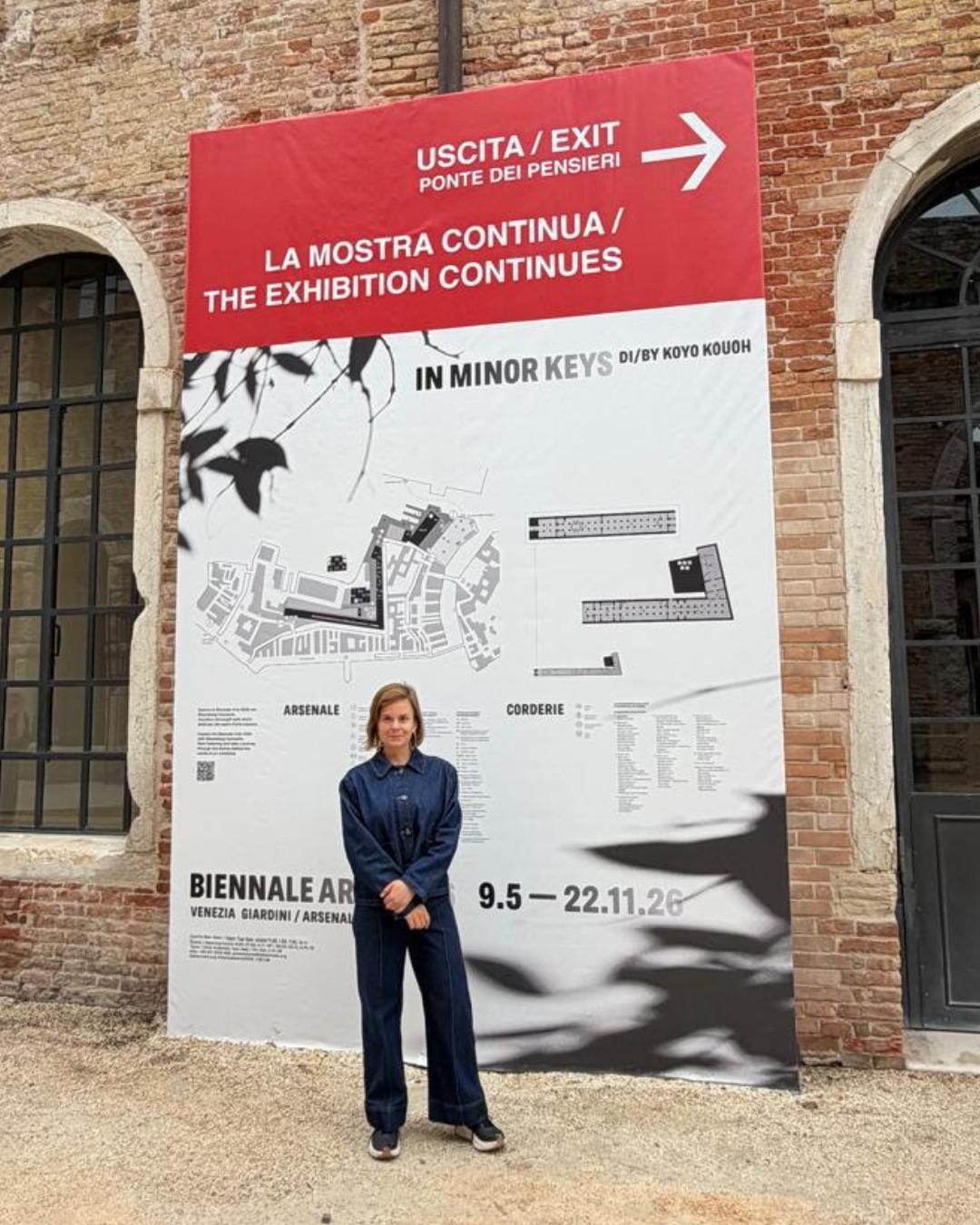
Jess Berlanga Taylor, Chief Campus Curator at UC San Diego, was appointed curator of the Mexico Pavilion at the 61st Venice Biennale—a role that places her at the center of one of contemporary art’s most visible and contested platforms. In this conversation, she discusses the structure of the Biennale’s national pavilions, her curatorial philosophy, the conceptual and political stakes of the work by collective RojoNegro, and what it means to bring Indigenous epistemologies into the heart of a global art institution.
Q: For readers who may not be familiar with how the Venice Biennale is organized, can you explain how the national pavilions relate to the main exhibition?
A: There’s a central curator—in this case, the late Koyo Kouoh—who shapes the main exhibitions at the Arsenale and the Giardini. And then surrounding that are the national pavilions, which each country commissions independently. Some pavilions choose to respond to the central curator’s framework; others pursue their own direction entirely. We chose to respond, because Koyo’s curatorial text, “In Minor Keys,” deeply resonated with the work we were bringing. But that’s a choice—a lot of countries have moved away from the idea of national representation altogether. Contemporary art is global, and countries are really moving away from that older understanding of what a national pavilion might look like, toward much freer ways of artists presenting their work.
Q: How did you come to be appointed as curator of the Mexico Pavilion?
A: Mexico’s pavilion is commissioned by the National Institute for Fine Arts and Literature—INBAL—the federal body that manages the pavilion for both the art and architecture Biennales. They convened a Committee of Curators, and I was included on that committee. Our task was to generate a shortlist of artists and evaluate their proposed projects. We arrived at three artists by consensus, one of whom was RojoNegro. Each artist was then asked to develop a project, which came back to the committee for a final decision. When RojoNegro expressed that they wanted me as their curator, I recused myself, and the committee deliberated in my absence. They could have selected a different curator—but they affirmed the appointment. That was the process.
Q: What does it mean to you personally to be part of something at this scale?
A: It’s a huge honor, because you’re joining a lineage—previous artists and curators from Mexico who have represented the country at the pavilion, many of whom I have enormous respect for, some of whom have been my mentors. So there’s that dimension of it, which is both exciting and daunting. And then there’s the opportunity to present work you believe in wholeheartedly at the most visible platform of contemporary art in the world. What makes it so exciting is that you can align your curatorial values and your research interests with the work—in this case, RojoNegro’s practice. Because it’s not just a poetic intervention. It’s also a political stance. And to have the opportunity to present that, to have your voice included there—it’s huge. I’m also thinking about who comes next. We keep opening up the possibilities of representation—of what contemporary art is, and what contemporary art in Mexico is.
Q: How would you describe your curatorial process, generally speaking?
A: I always start by trying to understand the context I’m going to be working in—who inhabits it, what its histories are, and how the art I want to bring might add to or complicate what’s already there. I really like to focus on the place where the conversation between people and the artwork is going to happen. With the Stuart Collection at UC San Diego, for example, I looked at what was already present and asked what was missing from the discourse. That’s how we selected the artists for the Emerging Artist commissions. With the Mexico Pavilion, it was very much about looking at what previous pavilions had shown—and what had been systematically absent from those displays. My process also involves deep research into the artists themselves: what they read, what music they listen to, who their references are in the art world. I try to get into their worlds and their heads. Curatorial work is authorship—it’s like writing a book. It becomes very personal and very intimate.
Q: Can you say more about that—curatorial work as authorship?
A: Curatorial work is about creating relationships: between ideas, contexts, histories, people, materials. The particular way a curator draws those connections—to propose an idea, to argue for a way of seeing—is very personal and particular. You can’t really separate your values and beliefs from what you’re curating and how you’re curating. It’s about how you draw the line between all of these different variables. It’s like taking fragments of information and post-producing them into something new.
Q: How does RojoNegro’s work speak to Koyo Kouoh’s “In Minor Keys” framework?
A: When RojoNegro and I first discussed Koyo’s text, there were two aspects they immediately recognized themselves in. The first was a critique of hyper-consumption in art—the mindless absorption of work as spectacle or entertainment, and the capitalistic modes of producing and displaying art. RojoNegro’s practice moves away from that and offers a different path. The second was this attention to the systems and intelligences that are holding up the world but that we don’t see or recognize. What are the structures that, if they are hurt or destroyed, cause the world to fall apart—but that aren’t immediately visible? Koyo was gesturing toward art from the Global South, which still needs far more access to the main circuits of contemporary art. And the art market plays such a huge role in what gets shown, even at the Biennale, even when the official idea is that it shouldn’t. RojoNegro’s work doesn’t participate in that market. It offers something quieter, more communal, more collaborative.
Q: What will the pavilion itself feel like to visitors?
A: The pavilion is conceived in its totality as a ritual—as an offering. As you enter it, you’re participating in that ritual. We’re creating a space that invites you to slow down, to realize that you’re stepping into a different understanding of space and time—one that is not our Western understanding. If you allow yourself to move through the space in a quieter, slower way, you encounter other forms of living and other forms of intelligence that are right there and have a lot of information about how we might step into the future. We’re also talking about entanglement—the idea that everything is deeply interconnected. We’re not silos. As humans, we’re also plants, we’re also animals, we’re also stardust. The pavilion is asking visitors to understand what that sacredness is. And it’s making an argument that the future is also in the past—that if we return to Indigenous forms of knowledge and practice, we can see a way to step forward. It’s spiritual and poetic, but because of the specific elements being engaged and the stakes of what RojoNegro is doing, it’s also deeply political.
Q: RojoNegro’s work is also being installed at UC San Diego soon. What does that convergence mean?
A: The two pieces are completely separate—site-specificity and the Biennale’s own rules require that. But their simultaneity is significant. RojoNegro doesn’t operate within the hyper-visible part of the contemporary art world. The artists who have previously represented Mexico at the pavilion had often already reached a certain kind of institutional status. RojoNegro, because of how they work and how they lead their practice, haven’t been in that position. So the validation they’re receiving—both from Mexico through Venice and from a major institution like UC San Diego—is substantial. What’s especially meaningful is that the Chancellor specifically requested this artwork for the new main entrance to campus, because he understood immediately that the work is about education and knowledge—just not the Western form of producing and disseminating knowledge. That’s a really bold statement. And for the Stuart Collection, this is the first commission to a Mexican Latinx artist in its history. It signals a shift in direction—in who we’re addressing, whose cosmologies we’re centering. It’s not an either-or. It’s an and. We’re bringing the legacy into the future, but signaling that it has to be through some bold moves and changes.
Q: You’ve mentioned intelligence a few times in ways that go beyond the human. Can you say more about that as a through-line in the work?
A: We’ve always located intelligence in the individual, in the human being. But there are intelligences in materials, in plants, in animals—intelligences we haven’t recognized as such, because they don’t fit our frameworks. At a moment when everyone is asking what intelligence means in the context of AI, I think it’s crucial to hold open the question much more broadly. What RojoNegro’s work is doing, and what I’m hoping to be able to discuss more publicly coming out of Venice, is connecting that conversation about intelligence to art, to technology, to the past and the future. For me, being able to enter into that discussion—to establish that I have my own approach, my own way of relating to art and to artists, and that I’ve had a particular practice of bringing to the public the intersections between contemporary art, public life, social justice, and now technology—that’s what feels like the real opportunity of this moment.
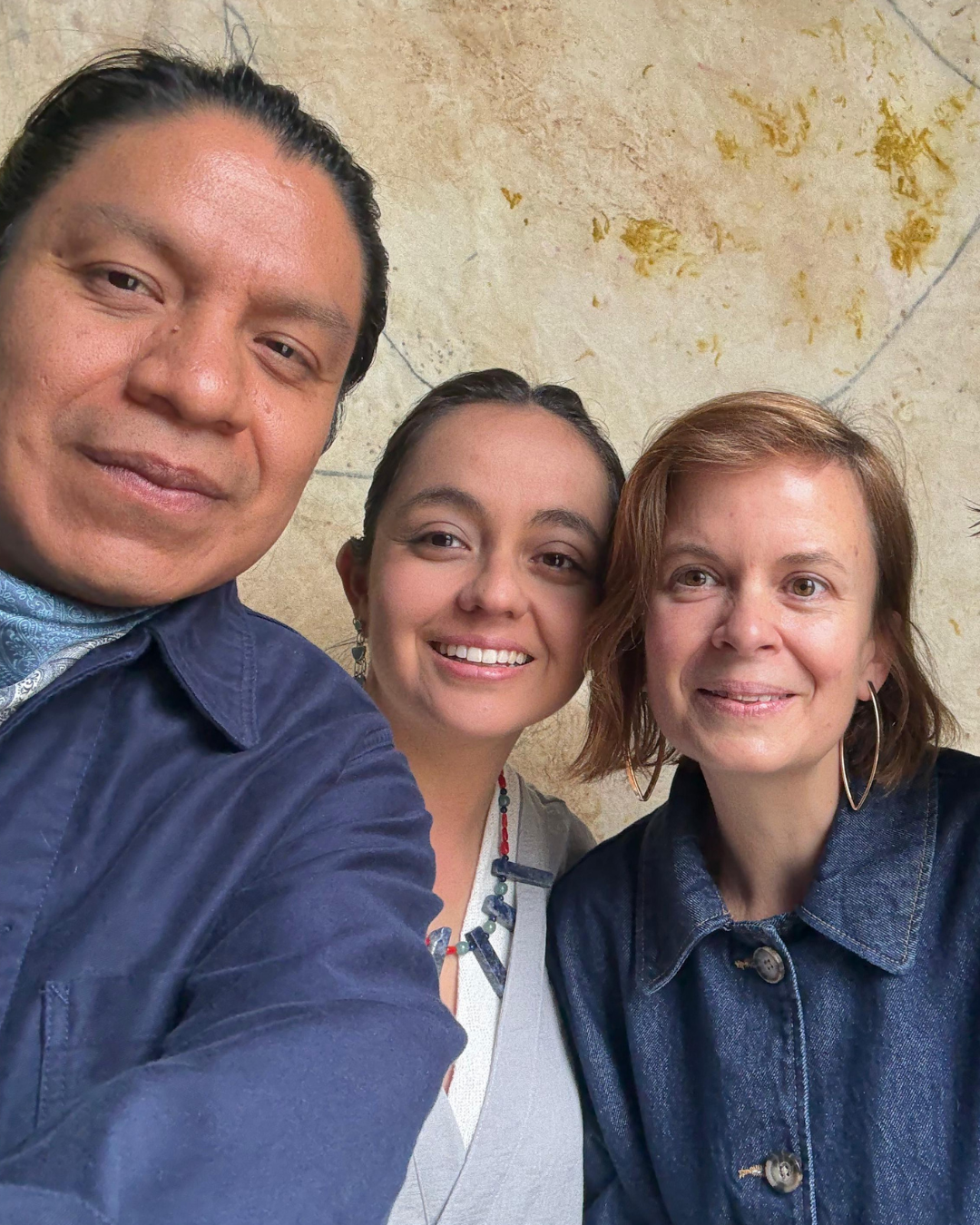
Noé, María and Jess at Venice Biennale
RojoNegro and Jess during the installation of RojoNegro's work, "Actos invisibles para sostener el universo" at the Venice Biennale 2026 in the Mexican Pavilion.
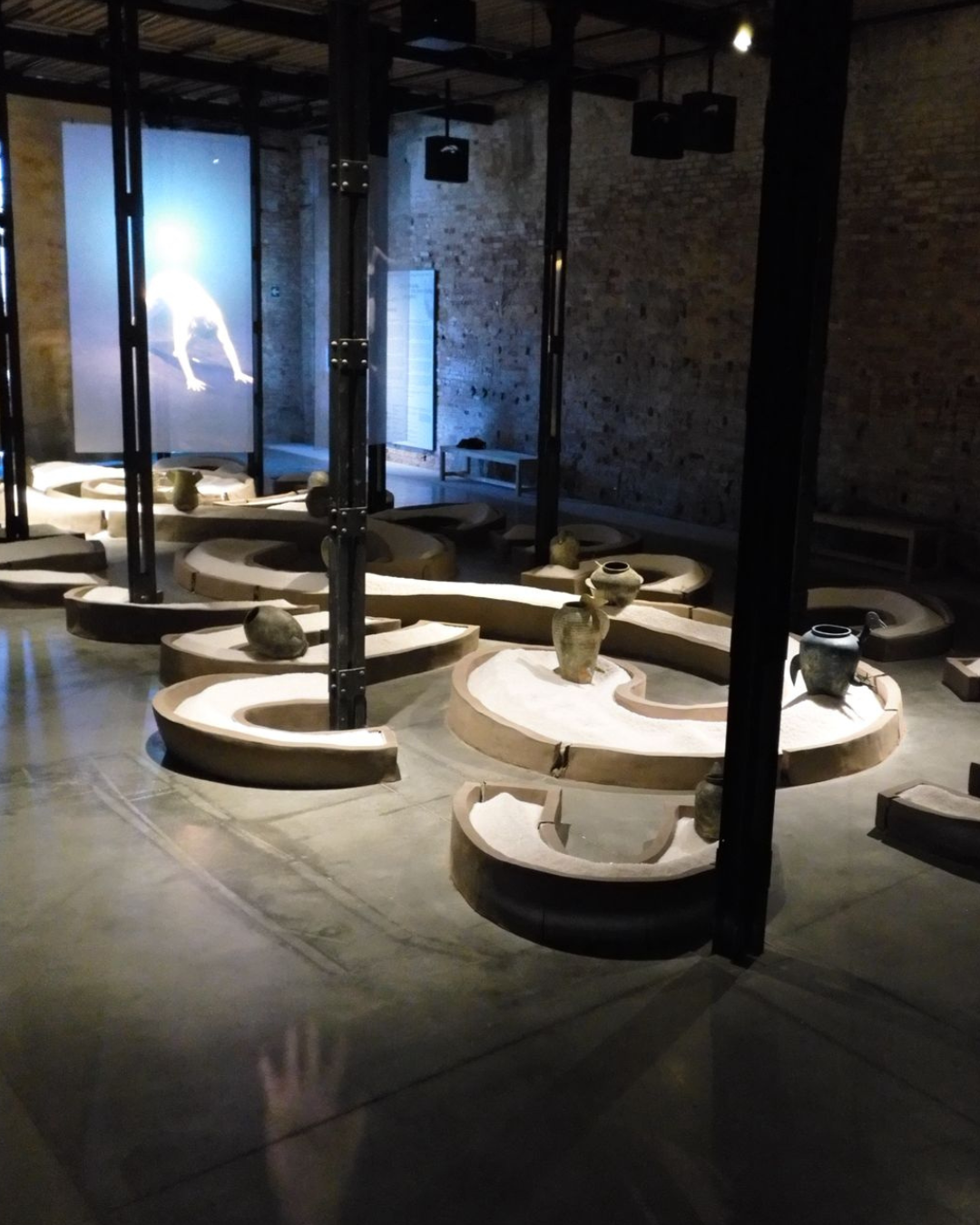
"Actos invisibles para sostener el universo" by RojoNegro
Mexican Pavilion at the Venice Biennale, 2026
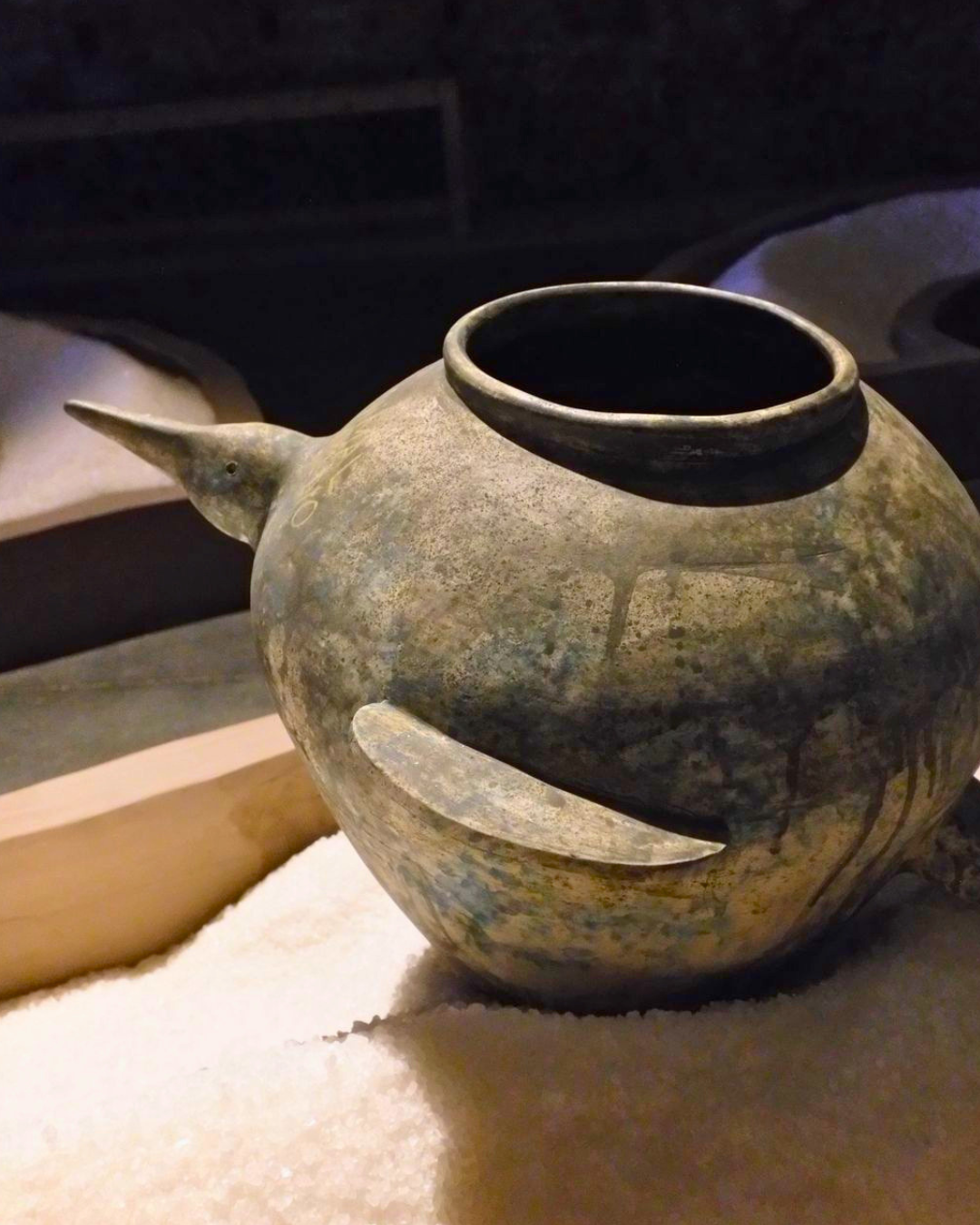
One of the ceramic pieces in "Actos invisibles para sostener el universo" by RojoNegro
Mexican Pavilion at the Venice Biennale, 2026
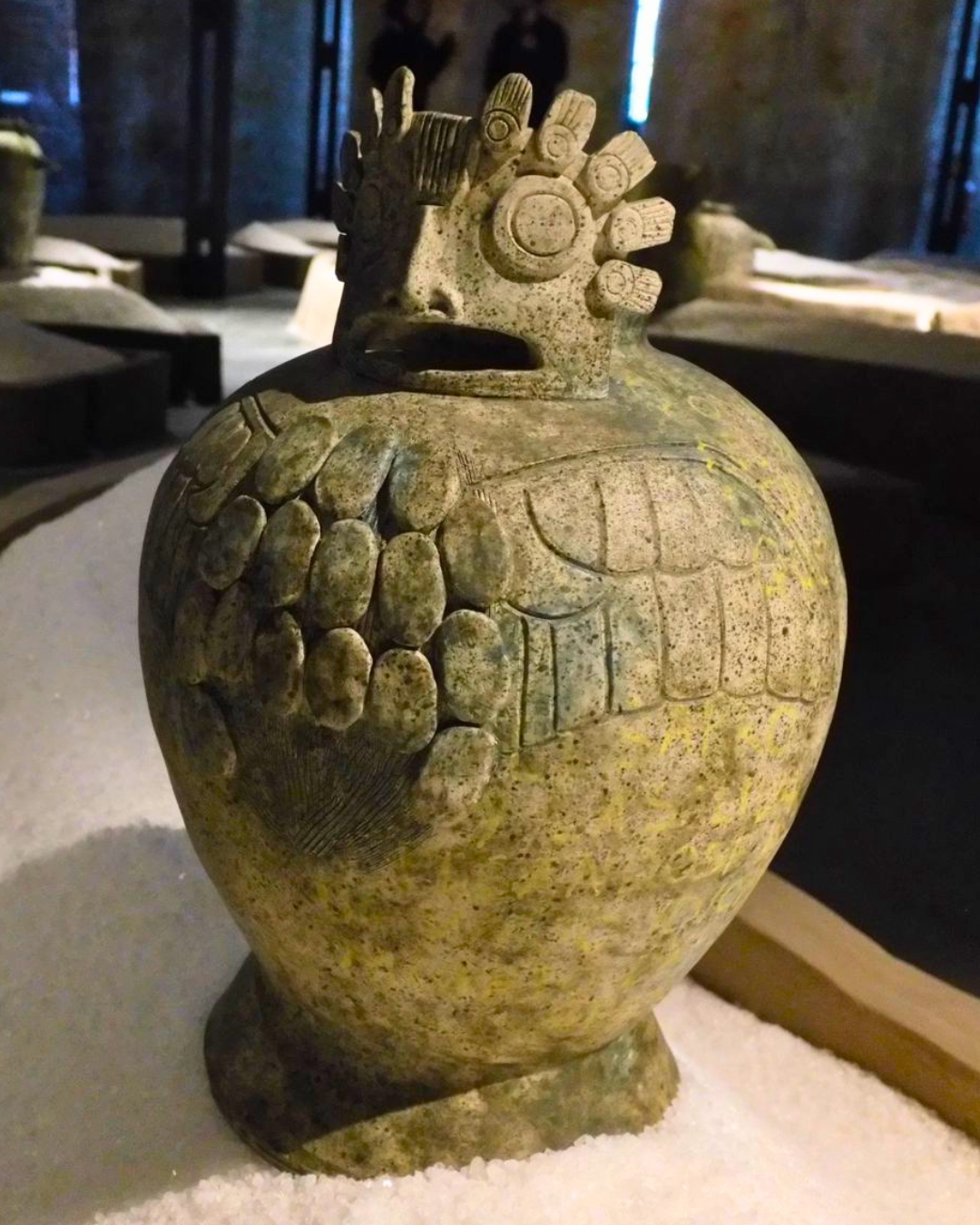
One of the ceramic pieces in "Actos invisibles para sostener el universo" by RojoNegro
Mexican Pavilion at the Venice Biennale, 2026
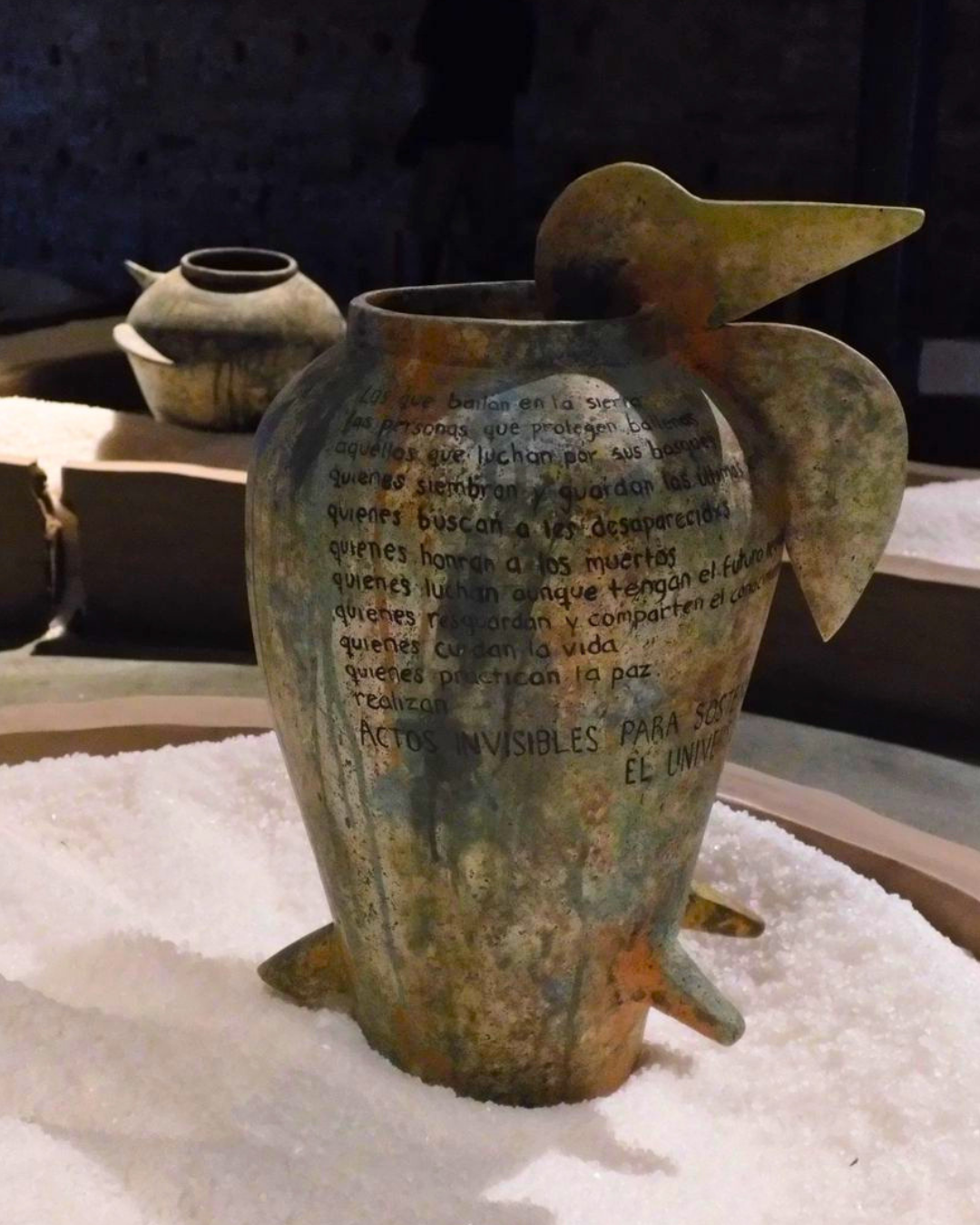
One of the ceramic pieces in "Actos invisibles para sostener el universo" by RojoNegro
Mexican Pavilion at the Venice Biennale, 2026